
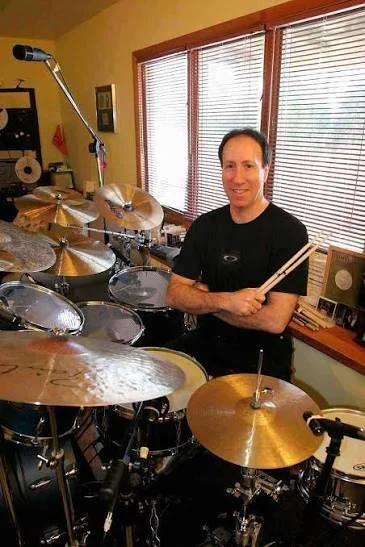
From Teenage Jazz Prodigy to Virtuoso Across the Musical Spectrum
“Where do I begin? To tell the story . . .”
No, I'm not writing about the theme from the sappy 1970 film Love Story. I've just finished listening to a collection of recordings and watching videos featuring drummer Terry Silverlight, and I'm not quite sure where to begin. His range of musical styles is extraordinary, his playing consistently impressive, and the experience of listening to him more than a little humbling.
Speaking of humbling, I first encountered Terry when we were both in our late teens. At the time, I regularly visited a small jazz club in my hometown of Trenton, New Jersey, where my drum teacher, Tony DeNicola, often accompanied Trenton-born jazz saxophonist Richie Cole. One evening, Terry was behind the drums, and he practically knocked me off my bar stool. I had never heard anyone play with such force, precision, and drive. At times, it sounded as though there had to be a second drummer playing alongside him.
At the time, I was playing in an 18-piece big band and studying with Tony's former teacher, the legendary Henry Adler. I was feeling pretty good about my own playing. And then I heard Terry.
We were the same age, but he was operating on a different musical plan.
Fast-forward quite a few years. I attended a concert at New York City's Town Hall featuring my favorite vocalist, Linda Eder. And there was Terry Silverlight, this time providing the rhythmic foundation for Linda's interpretations of Broadway classics, swing, and songs associated with Barbra Streisand. It was a very different musical setting from the explosive jazz playing I remembered, but Terry sounded equally at home. You'll hear examples of that work in the recordings below.

Fast-forward another couple of decades. I came across a video of Terry on YouTube and decided to contact him about taking a lesson. I drove to upstate New York, and we've stayed in touch ever since. Along the way, I discovered that Terry was also a close friend of Morris “Arnie” Lang, the longtime New York Philharmonic percussionist who had helped prepare me for my conservatory auditions when I was 23. Cosmologists estimate that the observable universe is approximately 93 billion light-years across, but often, the drumming universe is considerably smaller.
A Musical Career That Defies Easy Categorization
It's difficult to know where to begin describing Terry's career, partly because it encompasses so many different musical settings. At just 14, he played drums on White Heat, the pioneering jazz-fusion album led by his brother, keyboardist Barry Miles. It was an early example of a musical movement that was beginning to blur the boundaries between jazz, rock, and other contemporary styles. Terry's involvement at such a young age was remarkable enough; the sophistication of his playing made it all the more impressive.
Following his years at Princeton University, Terry built a career that extended well beyond jazz fusion. His credits include work with artists as varied as Mel Tormé, Roberta Flack, and Billy Ocean, along with performances in Broadway pit orchestras and tours with the Manhattan Jazz Orchestra. He has also composed extensively for television and film. A visit to Terry's website offers a fuller picture of just how much ground his career has covered.
What interests me most, though, isn't simply the length of his résumé. It's his ability to adapt his playing to the musical situation without sacrificing his own identity as a drummer.
The Art of Driving a Big Band
One of my favorite examples is the video below featuring Terry with David Matthews' band performing Duke Ellington's It Don't Mean a Thing (If It Ain't Got That Swing).
Listen to how Terry propels the band. His comping is fluid and relaxed, with an easy swing feel that never gets in the way of the ensemble. But every so often, he unleashes a burst of energy that lifts the entire performance. It's that combination of restraint and intensity that makes his playing so compelling. He knows when to settle into the groove and when to push the band forward.
Laying a Foundation and Soloing Over the Bar Line
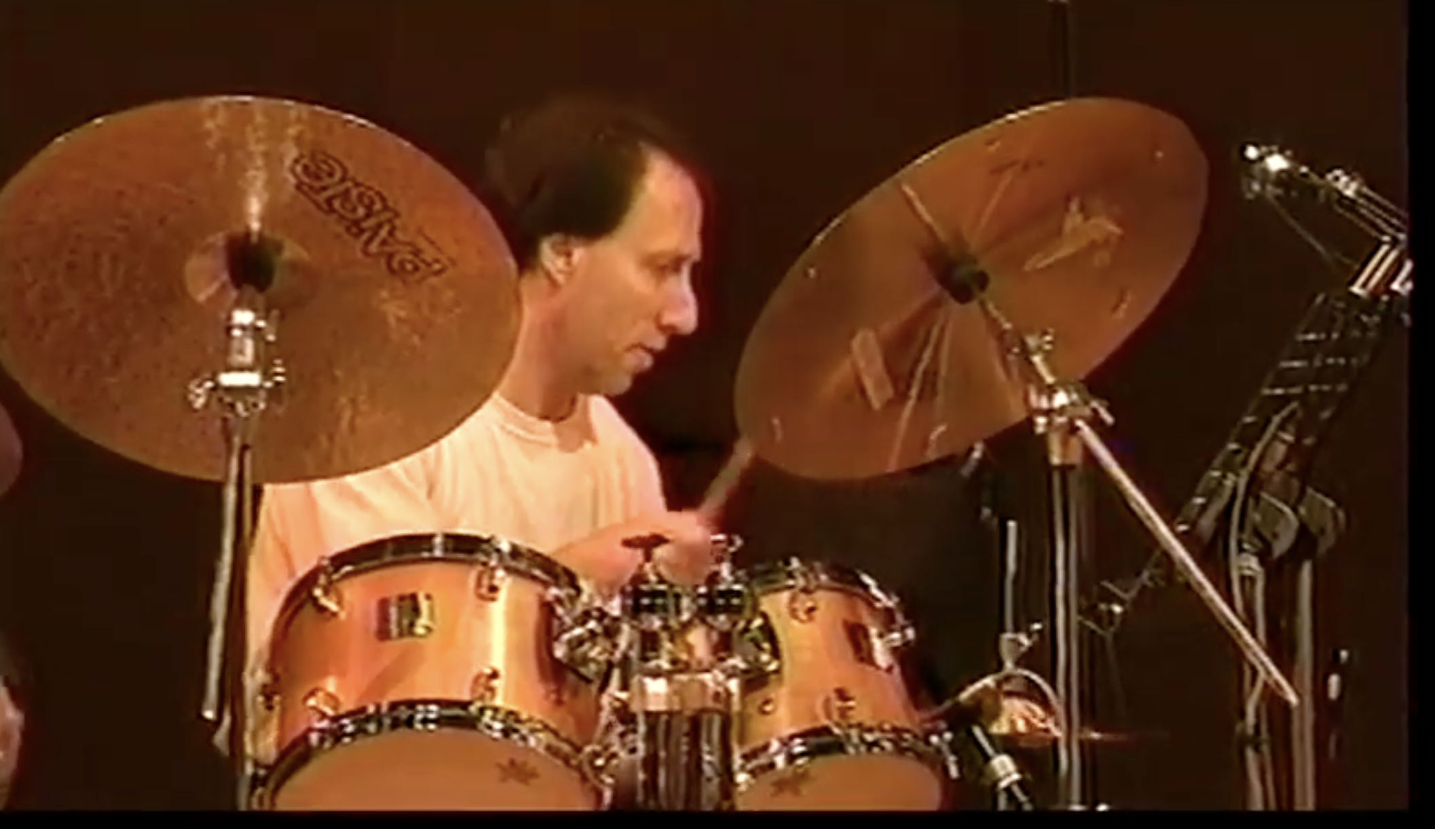
In this video, Terry joins his brother, Barry Miles, Will Lee on bass, and a small jazz group as they trade 8-bar solos. Terry places a strong 2 and 4 backbeat in just the right place. His solos are classic Terry as he juxtoposes technique and creativity and somehow keeps the 8-bar phrasing in time. (His instructional book, The Featured Drummer, delves into extending the bar line in great detail.)
Watch this performance on YouTube
Technique in Service of the Music
Finally, take a look at Terry playing at a blistering tempo in the video below.
There's plenty to appreciate from a technical standpoint. His execution is remarkably clean, even at that speed. Notice the steady quarter notes on the hi-hat, along with the ruffs and ghost notes that add texture and dimension to the groove. But what stands out to me isn't simply the technique; it’s the musical energy. Nothing sounds forced or frantic. Even at an exceptionally fast tempo, Terry maintains control, precision, and forward momentum.
And that's an important distinction. Technical proficiency is impressive, but it's what a musician does with that proficiency that ultimately matters.
A Musician Worth Exploring
I've included several recordings and videos throughout this article to illustrate Terry's range, but they barely scratch the surface of his work. If you're unfamiliar with Terry Silverlight, I encourage you to explore his recordings, visit his website, check out his instructional books, and spend some time with his many performances available on YouTube.
He's a musician whose career demonstrates that versatility and a distinctive musical voice are hardly mutually exclusive. And having gotten to know him personally, I can add that he's an engaging, gracious, and refreshingly unassuming person. Not a bad combination for someone who's been turning heads behind the drums since he was a teenager.